AI for GRC - not generic AI
The AI GRC Expert
A regulatory analyst that has read every rule – and shows its sources
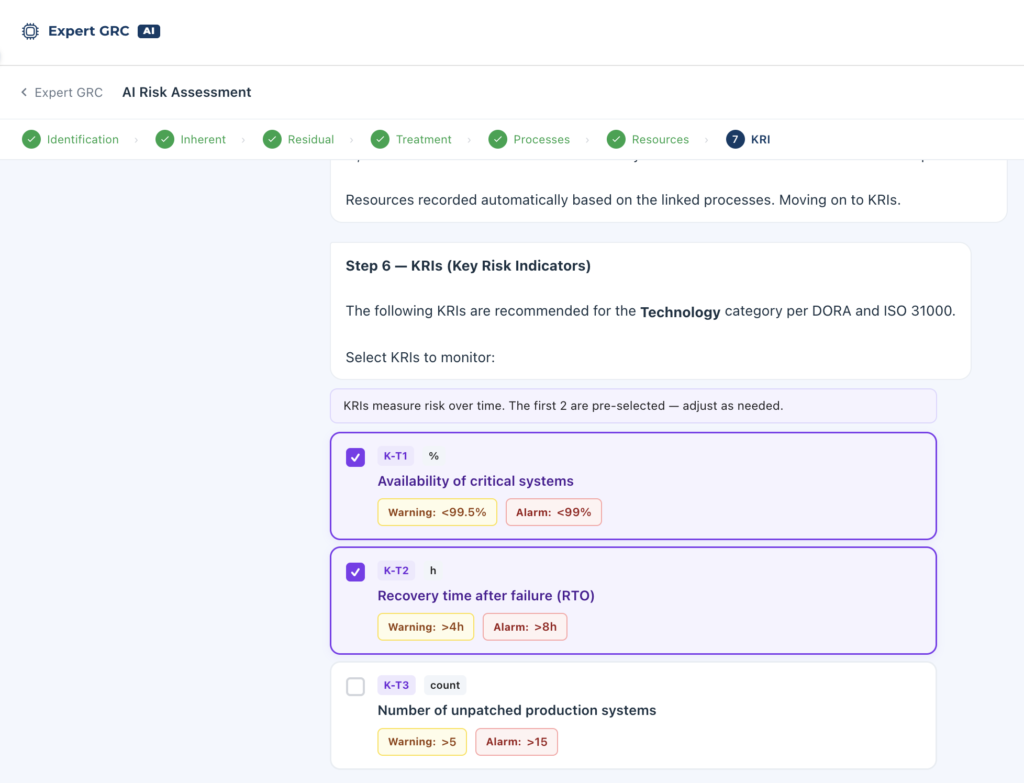
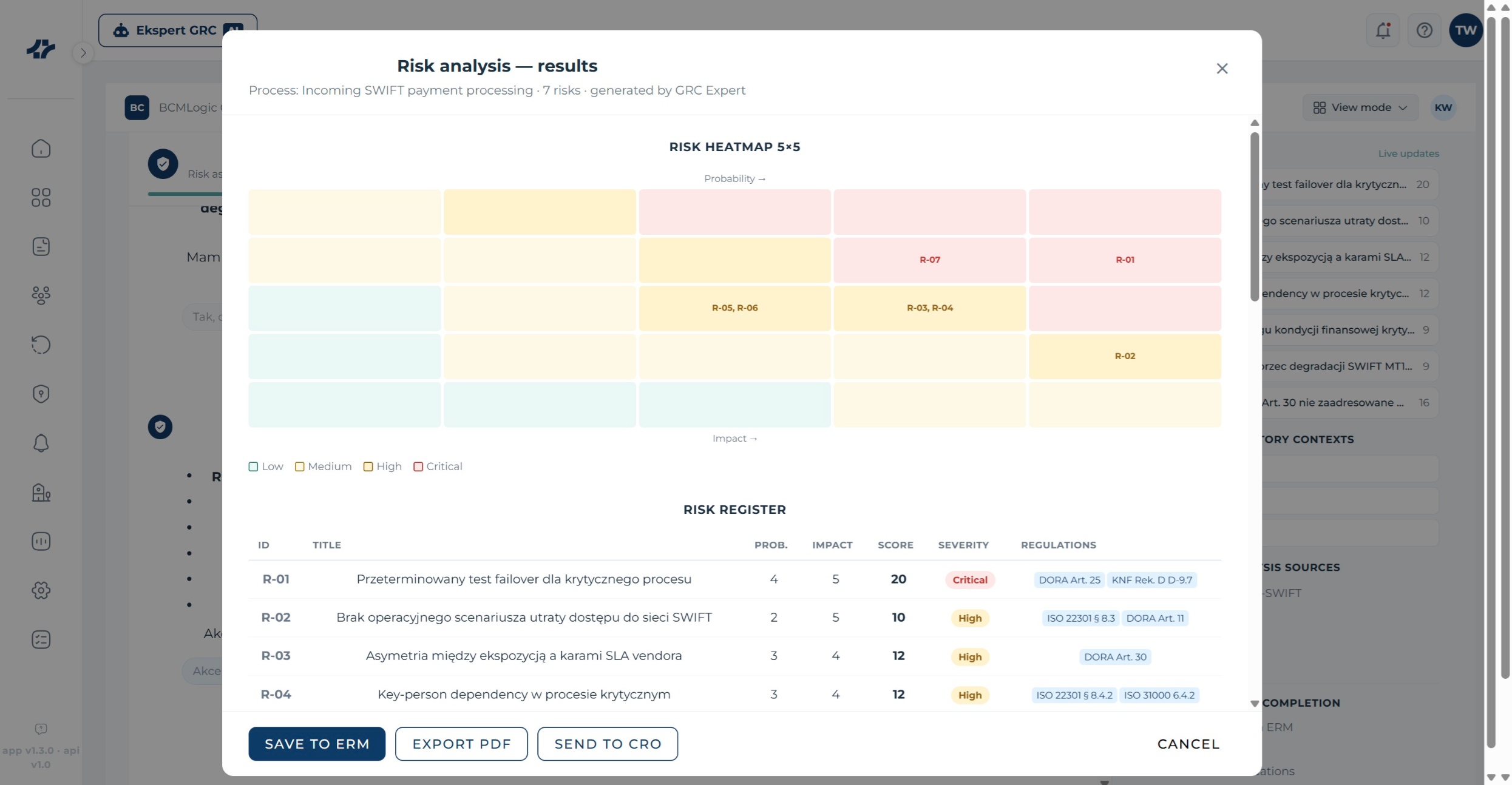
Ask a regulatory question, run a risk assessment, draft a BIA, interrogate a vendor. The Expert answers from the EU regulatory corpus – and cites the exact article it drew from.
- Grounded, not guessing – every answer cites the specific article, clause or guideline. Verifiable, not confident fiction.
- Document analysis built in – drop in a contract, policy, vendor questionnaire; the Expert extracts, assesses and flags gaps against the relevant regulation.
- Works inside your modules – conversational risk assessment, BIA drafting, control gap analysis and vendor review, on your own tenant data.
- Human-in-the-loop, always – the Expert proposes, your analyst decides. Every output is a reviewable draft with reasoning exposed.
Bring Your Own LLM
AI Act compliance, and a defensible record of every decision.
In a regulated institution, “the AI did it” is not an answer your auditor accepts. Every AI interaction in BCMLogic is logged, attributable and reproducible – and you stay in control of which model runs and where.
- Bring Your Own LLM – run on our managed EU models, or connect your own. Your model governance, your contractual terms, your data boundary.
- AI Act compliance, by design – the platform is built for deployer obligations: documented use cases, human oversight, transparency to affected users, and an Evidence Hub that maps your AI usage to the Act’s requirements.
- Full audit trail – every prompt, source, model version and human decision recorded in a SQL audit log.
- No training on your data – your regulatory data is never used to train models. Hard boundary, contractually and technically.
- Source citations as evidence – mandatory citations aren’t a UX nicety; they’re the audit artefact that makes AI output defensible.
Agentic GRC
From answering questions to running the work.
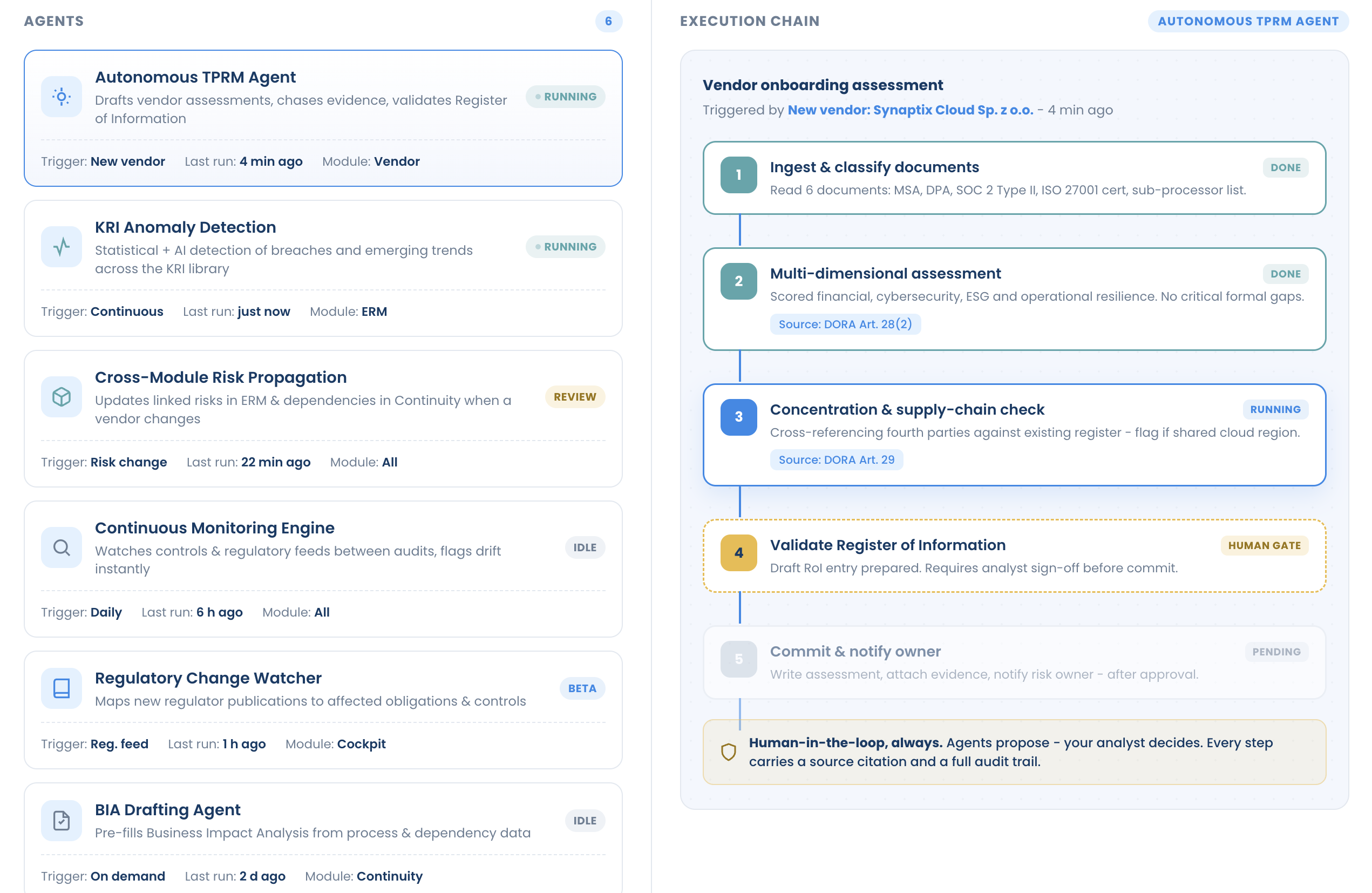
The Expert tells you what’s true today. Agentic GRC keeps it true. Specialised agents monitor controls, propagate risk across modules and surface what changed – continuously, not at the next quarterly review. Always proposing, never deciding unsupervised.
- Continuous monitoring – agents watch controls, KRIs and regulatory feeds between audits, flagging drift the moment it appears.
- Cross-module risk propagation – a vendor downgrade in TPRM updates the related operational risk in ERM and the dependency in Continuity. Risk stops living in silos.
- Autonomous TPRM agent – drafts vendor assessments, chases evidence, validates Register of Information entries – and hands the analyst a finished draft to review.
- KRI anomaly detection – statistical and AI-driven detection of breaches and emerging trends before they become incidents.
- Orchestrated, supervised, auditable – agents operate within defined guardrails, with human approval gates and a full trail. Autonomy with accountability.