

Digital Operational Resilience Act (DORA)
DORA compliance cocpit
Know your DORA posture at any moment. Not just at audit time.
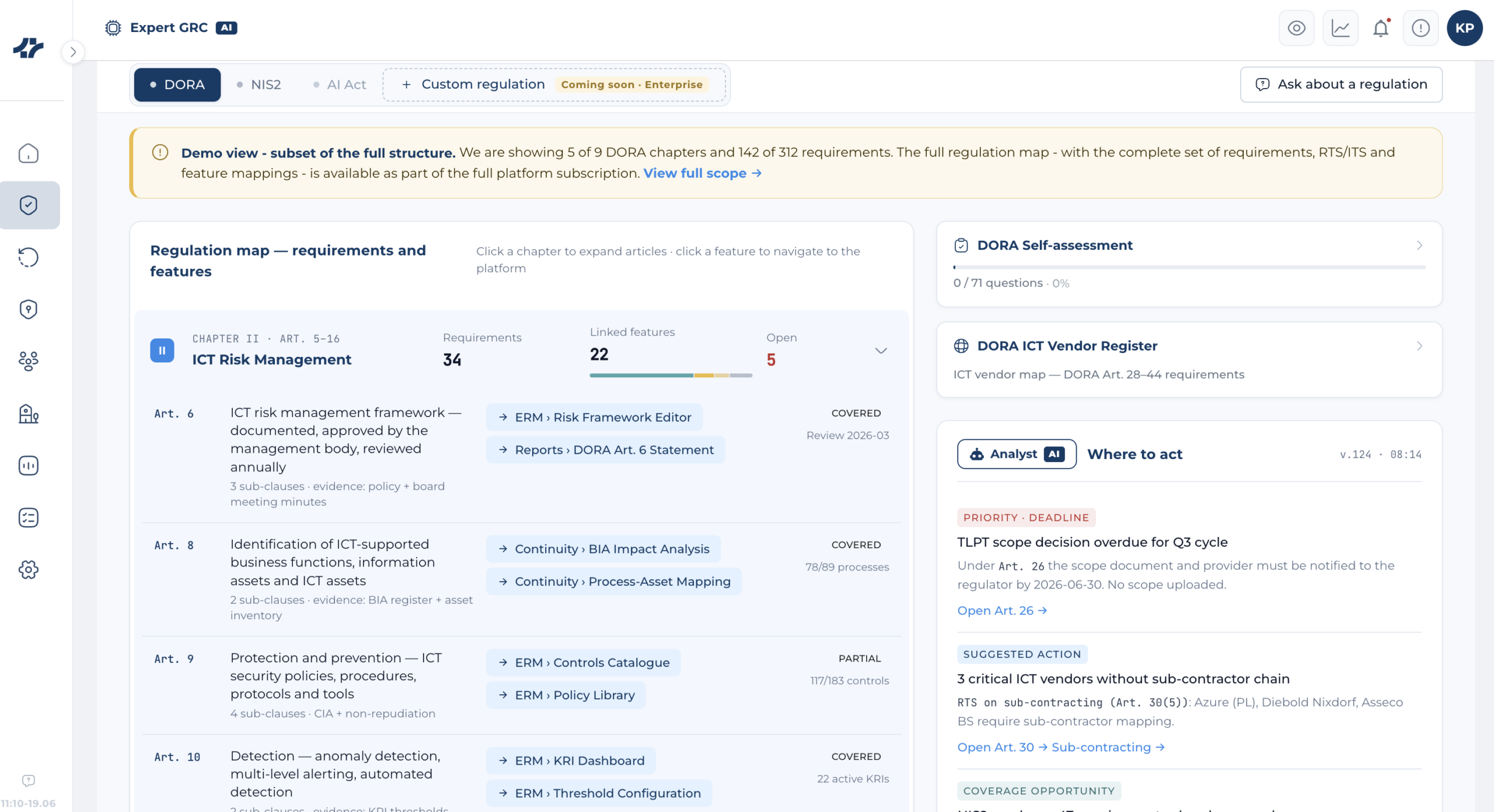
The Compliance Cockpit maps your organization’s controls against DORA requirements article by article. It aggregates evidence from across the platform – risk registers, incident logs, vendor assessments, BIA results, test records – and translates them into a real-time compliance picture.
- Article-level gap analysis across DORA chapters I-IX
- Automatic control status updates as underlying data changes
- Evidence linking – every compliance claim traceable to a source record
- Regulator-ready export: structured reports for KNF, EBA, and internal audit
- Cross-regulation view: DORA mapped alongside NIS2, KNF Rekomendacja D, and EBA ICT Guidelines
DORA self-sssessment powered by AI
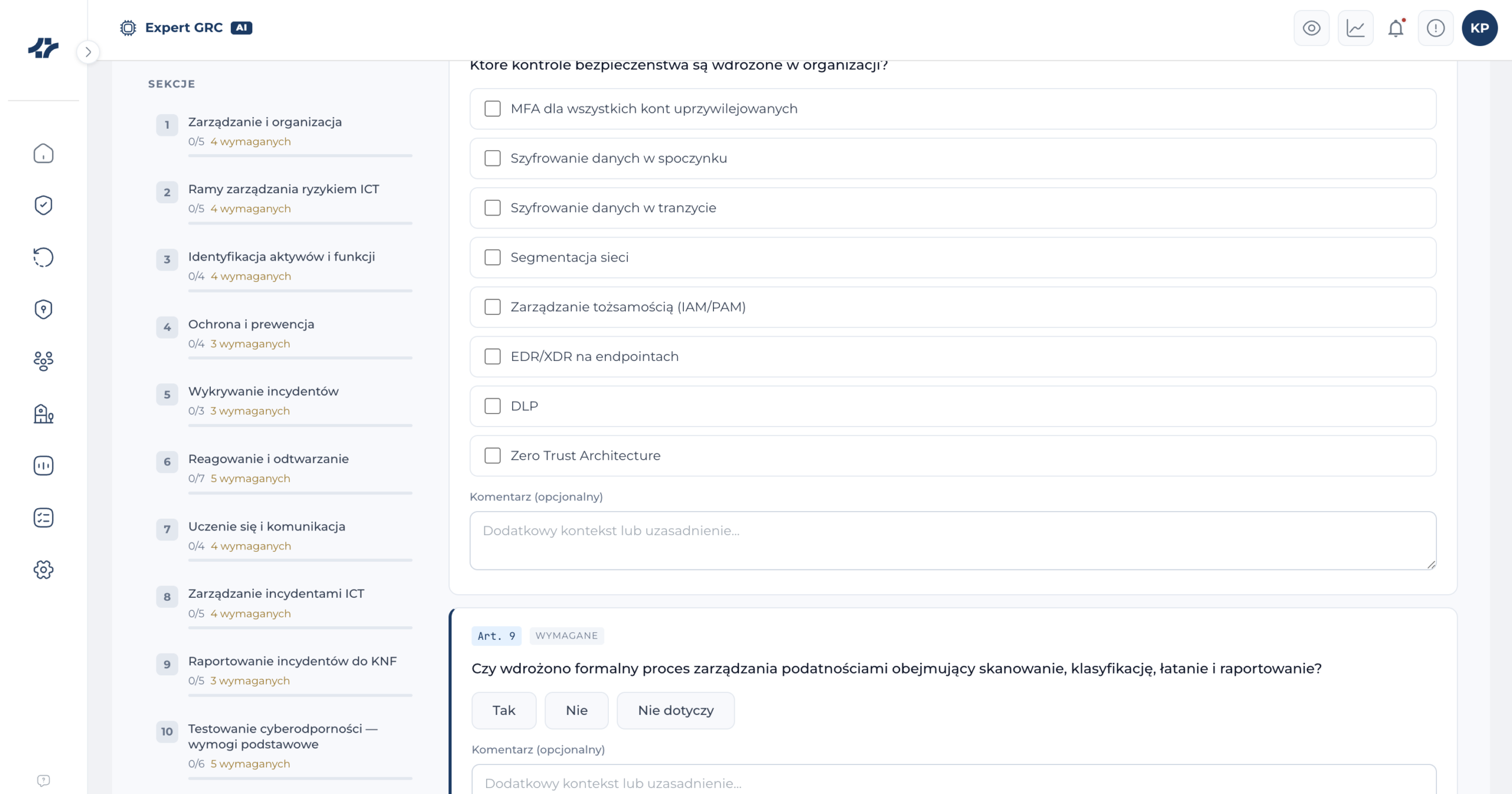
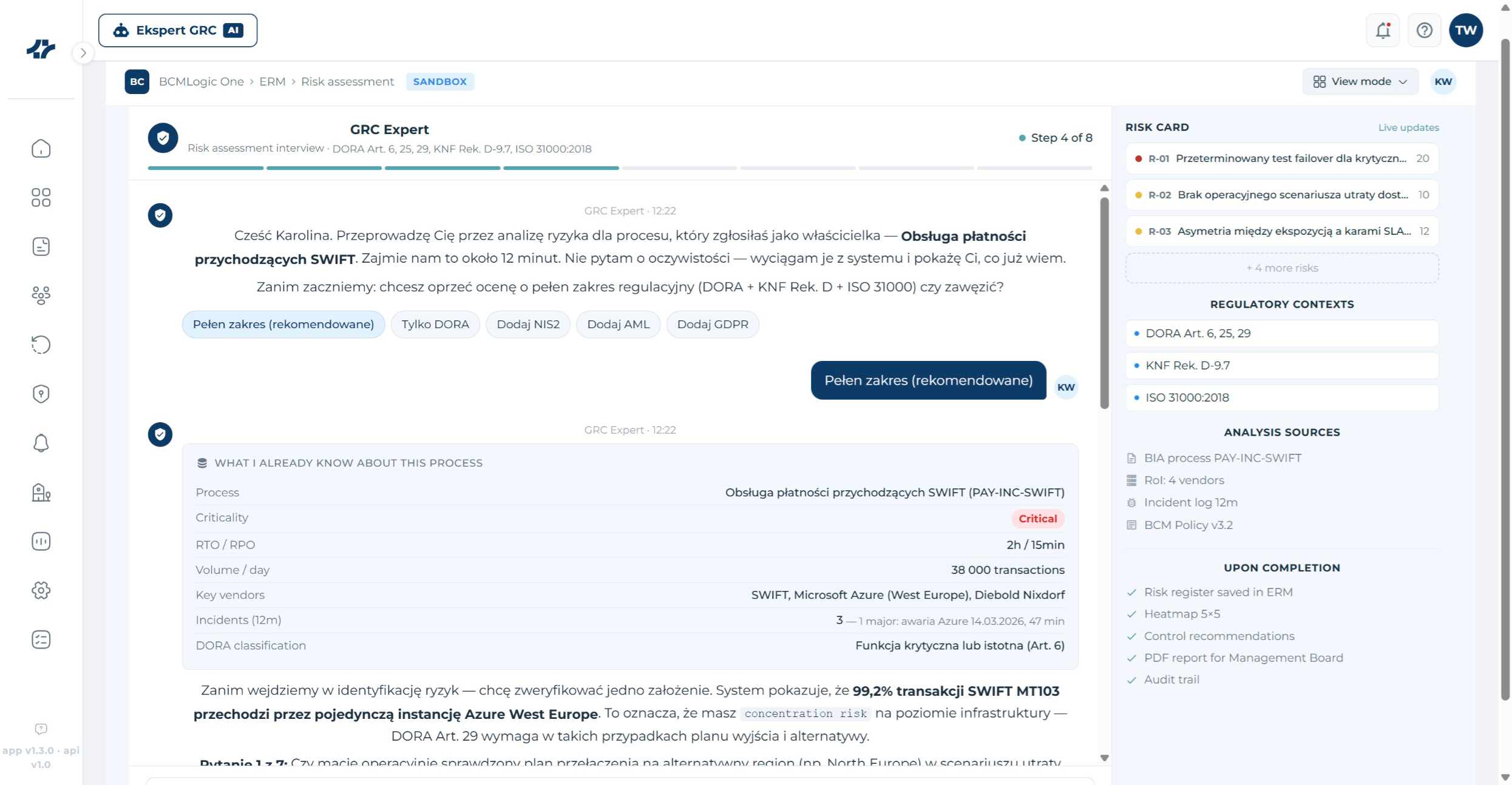
DORA requires financial entities to assess their own ICT risk management maturity. BCMLogic Next automates this assessment – not by filling in a generic questionnaire, but by analyzing your actual organizational data against regulatory requirements.
- AI reads your existing records: policies, risk register, incident history, vendor contracts
- Compares them against DORA RTS/ITS requirements and EBA guidelines
- Flags gaps with specific article references – not generic recommendations
- Every finding cites its source: the regulation article and the internal record it evaluated
- Human-in-the-loop by design: AI proposes, your team reviews and approves
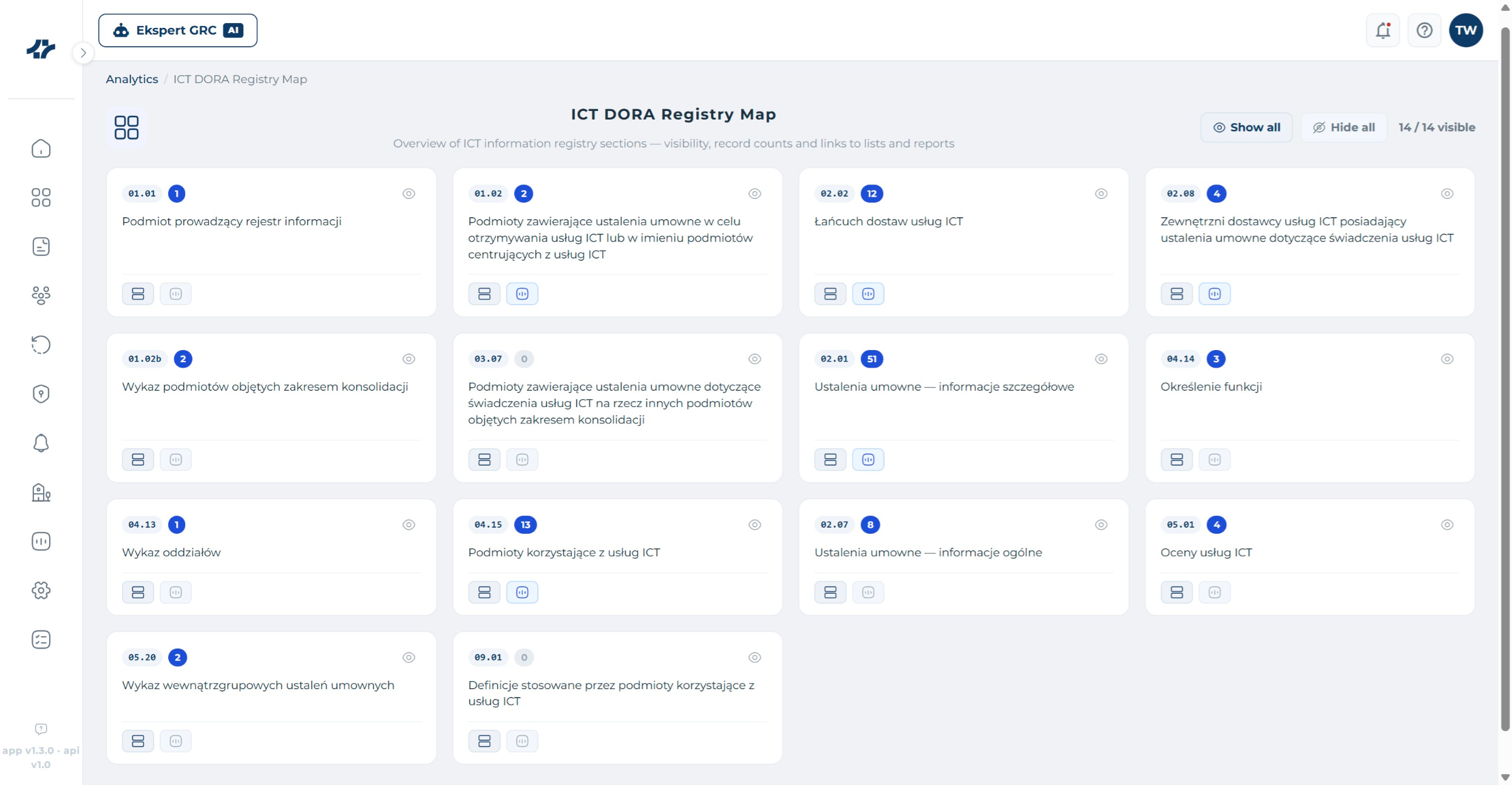
DORA Register of Information
BCMLogic Next is an all-in-one Enterprise GRC ecosystem designed to unify business continuity, risk management, and compliance into a single source of truth. The platform eliminates silos by connecting data points across the entire organization.
Build digital resilience in line with the DORA regulation
The DORA (Digital Operational Resilience Act) regulation introduces new, uniform rules regarding operational resilience in the financial sector. It covers payment institutions, banks, investment firms, insurers, and key ICT service providers. The goal of DORA is to ensure that every organization can effectively respond to technological incidents, cyberattacks, and operational disruptions – regardless of their source.
The BCMLogic Next platform is an advanced GRC-class solution that automates and operationalizes compliance management with the DORA regulation. The system integrates key areas of digital resilience, supporting organizations in building a secure business and technology environment.
Six pillars of DORA compliance in BCMLogic
- ICT Risk Management: A full risk lifecycle (identification, assessment, mitigation) compliant with ISO 31000. The system supports specific assessments for Cloud Computing (KNF guidelines) and ESG, utilizing KRI (Key Risk Indicators) for ongoing monitoring.
- ICT Third-Party Risk Management: A central register of contracts and vendors integrated with the audit module. The system allows for the automatic assessment of vendor security documentation and self-assessment survey results.
- Incident Management: Centralization of reporting for major ICT-related incidents. The module enables the consolidation of multiple event sources (BCM, Cybersec, OpRisk) into a single, consistent management process.
- Business Continuity Management (BCM): Comprehensive support ranging from Business Impact Analysis (BIA) and Minimum Acceptable Configuration (MAC) to the creation of emergency procedures and recovery plans.
- Digital Operational Resilience Testing: Oversight of the full testing cycle – from tabletop simulations and penetration tests to system recovery. The platform manages findings and tracks the implementation of required improvements.
- Business-IT Dependency Mapping: A unique approach to mapping links between business processes, IT services, infrastructure, and vendors. It allows for an immediate assessment of how a technical failure impacts key business functions.