

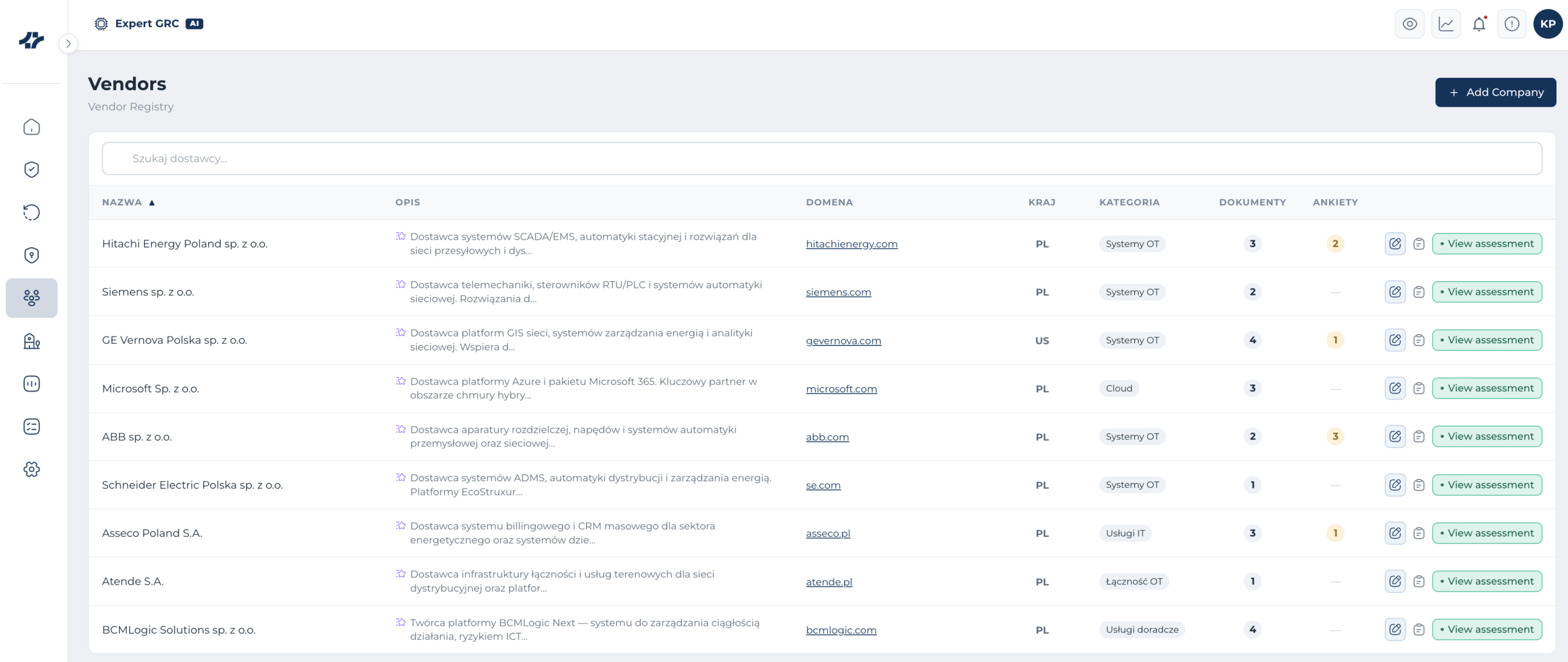
The Vendor Registry consolidates your entire ICT supplier portfolio: legal identity verified from national registries, sanctions screening across five lists (EU, OFAC, UN, PEP, BIG InfoMonitor), and beneficial ownership confirmed via CRBR.
Every vendor is classified at intake — DORA criticality, NIS2 sector, data location, Register of Information flag. That classification drives the depth of every subsequent assessment.
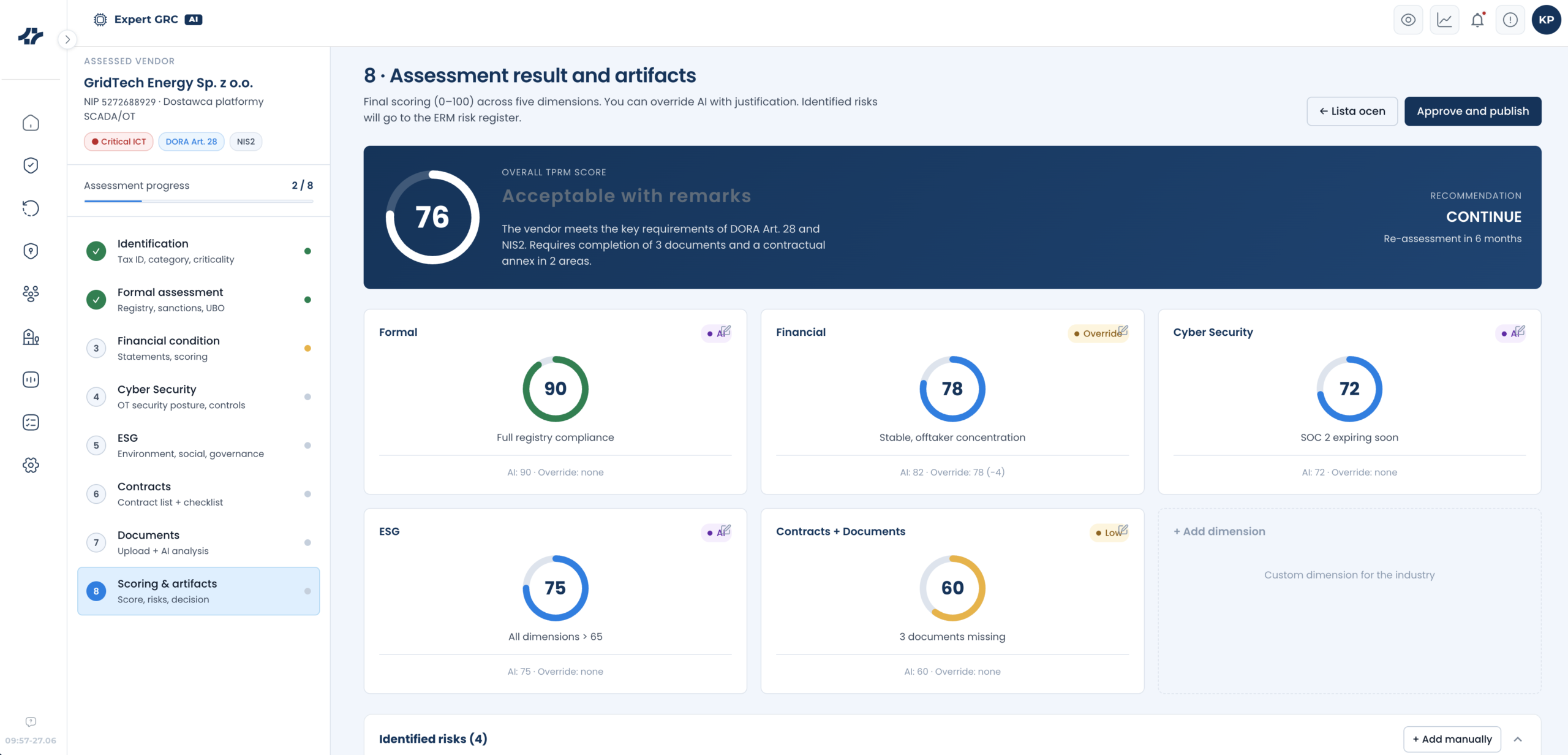
Each assessment pulls data from outside vendor self-reporting and closes with compliance artifacts your auditor can work with.
AI proposes a score at each step. Your analyst reviews, overrides if needed, and documents the rationale. Every override is logged.
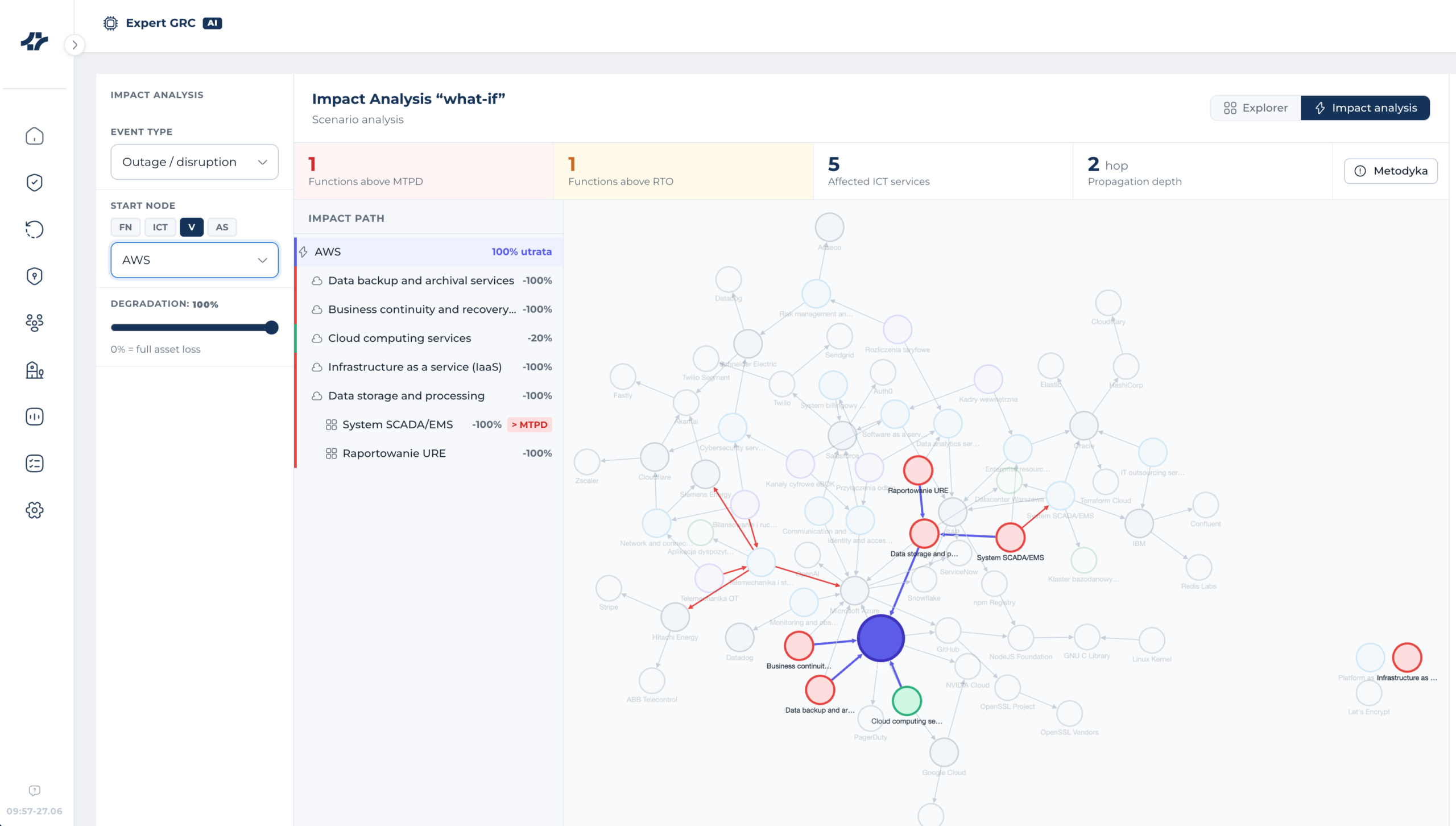
The ICT Supply Chain Explorer maps sub-processor relationships declared in contracts and cross-references them against your vendor inventory — surfacing undisclosed dependencies and concentration risk across the portfolio.
The Register of Information is generated continuously in EBA-compliant format as assessments are completed or vendors are reclassified.
Between assessment cycles, RiskRecon monitors the security posture of your vendor portfolio in the background. Changes in attack surface, certificate expiry, or DNS configuration trigger alerts — no manual review required.